The Chernobyl Accident: Unpacking the Critical Errors of April 1986
The name Chernobyl has become synonymous with nuclear catastrophe, a stark reminder of the immense power and potential perils of atomic energy. For those seeking to understand the precise timeline and mechanics of this devastating event, the question often arises:
Wann War Das Unglück In Tschernobyl? While the full-scale disaster culminated on
April 26, 1986, the seeds of destruction were sown the day before, through a series of critical errors, design flaws, and a profound disregard for safety protocols during a routine test at Reactor Block 4 of the Chernobyl Nuclear Power Plant, located in what is now Ukraine. This article delves into the precise sequence of events and the systemic failures that led to one of history's most severe industrial accidents.
The Fatal Experiment: A Routine Test Gone Awry
The fateful events began on the afternoon of
April 25, 1986, at Unit 4 of the Chernobyl Nuclear Power Plant. The reactor, one of four RBMK-1000 graphite-moderated reactors at the facility (considered a model plant of the Soviet Union at the time), was slated for a safety test. The objective was seemingly innocuous: to determine if the rotational energy of a turbine, after its steam supply was shut off, could generate enough electricity to power the reactor's vital emergency cooling pumps during a power outage, until the backup diesel generators could take over.
However, the very premise of the test was flawed, and its execution veered dangerously off course from the outset. Crucially, the test plan mandated that the reactor remain in operation, rather than being shut down for the procedure. Furthermore, several critical safety systems, including the emergency core cooling system (ECCS), were deliberately switched off to prevent them from interfering with the test. This decision alone represented a monumental violation of safety regulations, stripping the reactor of its fundamental safeguards.
The experiment was initially scheduled for the daytime but had to be postponed due to an unexpected demand for electricity from the grid. This delay meant the test was eventually conducted by the night shift, a team less familiar with the specific procedures and, crucially, less senior. Even during this delay, the emergency cooling system remained deactivated, further compounding the initial error and increasing the reactor's vulnerability.
Descent into Instability: A Cascade of Misjudgments
As preparations for the experiment resumed late on the night of April 25, the reactor's power level was gradually reduced. The test protocol required a reduction to approximately 25% of its nominal capacity. However, due to operator error or an unknown instability, the power plunged dramatically, falling to less than one percent of its nominal output within a very short period. This was a critical juncture. The RBMK reactor design, known for its inherent instability at low power levels, became exceedingly difficult to control in this regime.
At this point, the safest and most prudent course of action would have been to shut down the reactor entirely. Instead, driven by a desire to complete the test and perhaps a lack of understanding of the reactor's unstable state, the operating crew decided to try and restore power. To achieve this, they withdrew nearly all of the reactor's control rods—the neutron-absorbing elements used to regulate the nuclear chain reaction—far beyond safety limits. This action further exacerbated the reactor's instability and created a highly dangerous condition known as a "xenon pit," where neutron-absorbing xenon-135 built up, making the reactor difficult to power up.
Despite the highly unstable conditions, with power hovering around seven percent—still far too low for safe operation—the decision was made to proceed with the experiment. The technicians then closed the safety valves of the turbines, cutting off the steam supply and, consequently, reducing the water flow to the reactor core. This rapid decrease in coolant flow led to increased voiding (steam bubble formation) within the reactor core. The RBMK design had a positive void coefficient, meaning that an increase in steam bubbles actually *increased* the reactor's power, rather than decreasing it as in most other reactor types. This inherent design flaw was a critical, but largely unacknowledged, contributor to the impending disaster.
The Catastrophic Climax: Explosions and Core Meltdown
The combination of critically low power, an almost complete withdrawal of control rods, disabled safety systems, and the positive void coefficient created a highly precarious situation. As the experiment progressed, the reduction in water flow caused a rapid and uncontrollable surge in reactor power. Within a matter of seconds, the power output escalated dramatically, estimated to have soared to a staggering 100 times its nominal capacity.
The shift leader, realizing the impending doom, initiated an emergency shutdown by pressing the AZ-5 button. This action was meant to fully reinsert all control rods into the reactor core, halting the chain reaction. However, due to another critical design flaw of the RBMK control rods, this action had the opposite effect in the prevailing conditions. The tips of the control rods were made of graphite, which, upon initial insertion, actually displaced water and briefly *increased* reactivity before the neutron-absorbing boron sections entered. This "positive scram" effect provided a final, fatal push to the escalating power surge.
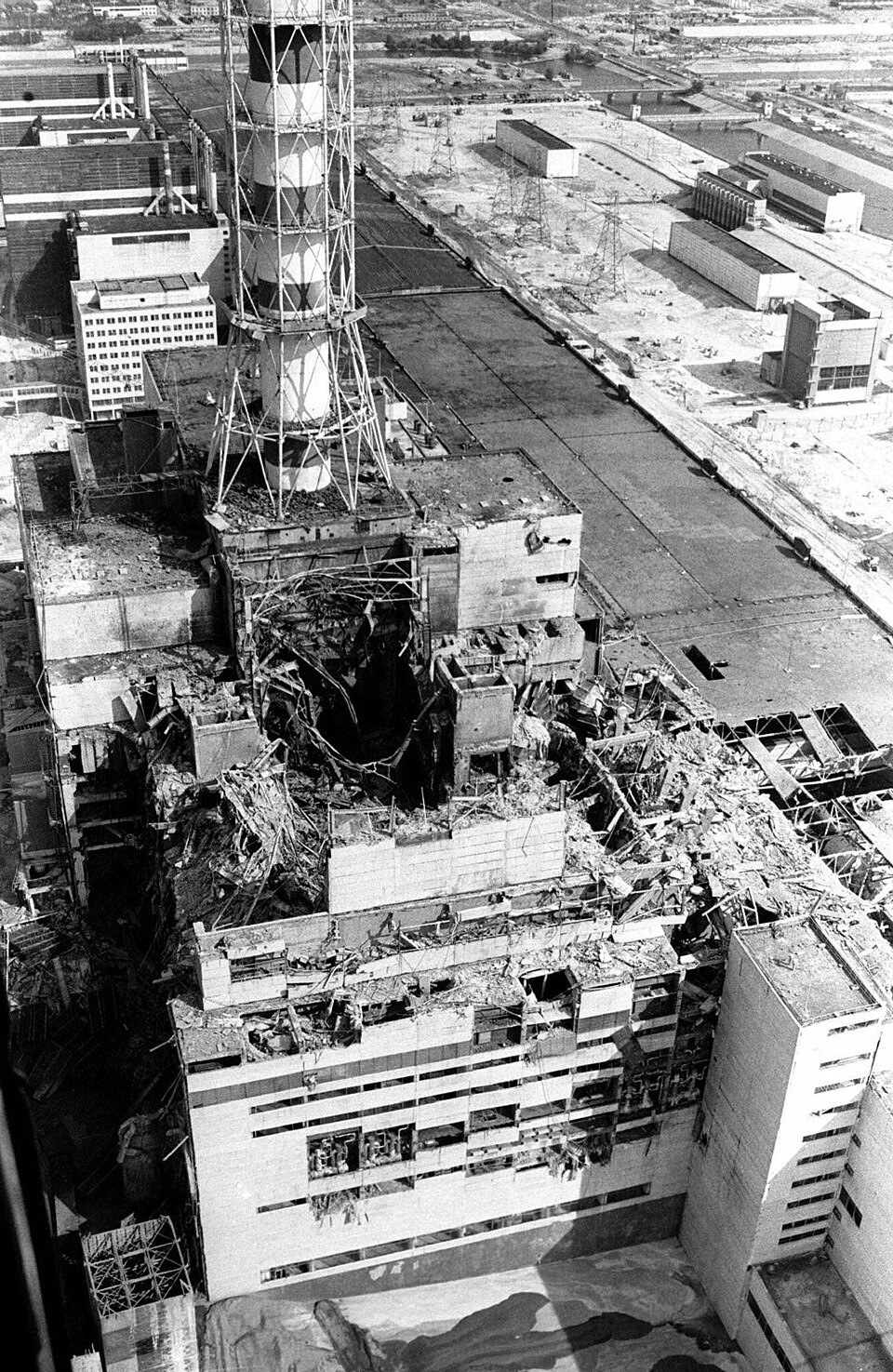
The rapid power spike caused the fuel rods to overheat and rupture, leading to an explosive build-up of steam. The immense pressure inside the reactor was far too great, causing the reactor lid, weighing over 1,000 tons, to be violently blown off. This was followed by a second, larger explosion, likely a hydrogen explosion resulting from the superheated steam reacting with zirconium and graphite. These catastrophic explosions completely destroyed Reactor Block 4, exposing the core to the atmosphere.
It was in the early hours of
April 26, 1986, specifically at 1:23 AM local time, that the Chernobyl accident officially escalated into a full-blown nuclear disaster, marked by a complete core meltdown and the massive release of radioactive material into the environment. This event is widely recognized as a
Super-GAU, or "greatest conceivable accident," signifying its unparalleled severity.
Aftermath and Lessons Learned: A Global Wake-Up Call
The immediate aftermath of the explosions saw vast quantities of radioactive isotopes, including iodine-131, cesium-137, and strontium-90, ejected high into the atmosphere. The radioactive plume drifted across large swathes of Ukraine, Belarus, and Russia, before spreading over much of Europe. The contamination led to the evacuation of hundreds of thousands of people, including the entire population of the nearby city of Pripyat, which now stands as an eerie ghost town. The long-term health and environmental consequences of the Chernobyl accident are still being studied and will persist for tens of thousands of years.
Chernobyl was a stark and brutal lesson for the global nuclear industry. It exposed critical flaws not only in the Soviet RBMK reactor design but also in organizational culture, safety oversight, and operator training. Among the most crucial lessons learned were:
*
Prioritizing Safety Above All Else: The deliberate disabling of safety systems and the disregard for established protocols demonstrated a systemic failure to prioritize safety over operational objectives.
*
Independent Oversight: The lack of independent regulatory oversight, typical in the centralized Soviet system, contributed to a complacent attitude towards safety and design deficiencies.
*
Transparent Communication: Information about the RBMK's design flaws, particularly its positive void coefficient and the "positive scram" effect of its control rods, was not adequately communicated to operators.
*
Human Factors in Complex Systems: The accident highlighted the critical role of human error, fatigue, inadequate training, and hierarchical pressure in highly complex technological environments.
*
Emergency Preparedness and Response: The initial chaotic and secretive response underscored the need for robust emergency plans, transparent communication, and international cooperation during nuclear events.
The Chernobyl disaster catalyzed a global reevaluation of nuclear safety standards and regulations. While nuclear energy continues to be a vital component of the world's energy mix, the industry has undergone profound changes since 1986, with enhanced safety features, more rigorous training, and stricter international oversight becoming the norm. The event serves as a permanent testament to the responsibility inherent in harnessing nuclear power and the critical importance of a robust safety culture. To understand the broader context of the event, you can delve deeper into the
Chernobyl Disaster: When a Routine Test Turned Catastrophic in 1986.
Conclusion
The Chernobyl accident was not a single, isolated event but rather the tragic culmination of a series of compounding errors, systemic design flaws, and a deeply flawed safety culture. For those inquiring
Wann War Das Unglück In Tschernobyl, the answer is unequivocally
April 26, 1986, the date etched into history as the moment the world witnessed the devastating consequences of nuclear power unleashed. The legacy of Chernobyl continues to influence global energy policies, reminding us of the immense power of scientific progress and the critical, enduring need for vigilance, transparency, and an unwavering commitment to safety in all human endeavors.